
Welcome to Author Sessions, a new series where we sit down with the writers behind our books to share the thinking, lived experiences, and gentle lessons that shaped their stories.
As our list grows this year, we’ll be publishing more of these sessions as a way to bring you closer to the authors, the messages, and the moments that make each book meaningful.
First up: Milly Voice. Early-years teacher, long-distance mountain runner, and debut author of Mildred The Marmot and the Mad Mountain March. Her first children’s story is inspired by her own mountain race in the Swiss Alps and her real lived experience. It is warm and full of heart, with themes of friendship, empathy and believing in yourself. Underneath it all is a message many children need to hear again and again: you can face challenging things, all you need to do is give it a go.

Why does reading matter so much in the classroom?
I’ve taught in different countries and across lots of age groups - but regardless, one thing remains true: reading is such an important part of teaching. It’s a huge part of learning and helps children express and articulate how they’re feeling. It opens up their imagination to a whole world of ideas, concepts and stories that help them learn, develop and grow.
How does confidence show up day-to-day in a classroom?
As adults, we take for granted the things we’re naturally confident in because we don’t even think about them. But for a little person, those first steps into nursery or a classroom mean that everything requires a new kind of confidence and independence they may never have experienced before.
It’s a bit like Mildred. They’re doing their own “little race” every day, with small challenges as they come into the classroom. Confidence for little ones is about trying something new and believing they can.
That might be sitting next to someone new, putting their hand up for the first time, tying their shoelaces… all of those things take confidence. It’s easy for us to forget how monumental they can feel, especially when the classroom experience is overwhelming. That’s why building confidence from an early age matters so much.
How can story time help children practise confidence?
Story time is confidence-building because the act of reading is nurturing. It helps a child feel less alone in their experiences and in my experience, reading together helps little ones feel like they’re on a journey with a parent, teacher (or caregiver) escaping into a different world together, like a team.
Reading as a team really helps build a love of learning, and it creates a space where a child feels safe to explore words, help them realise feelings and thoughts the story and characters bring up for them, and start saying them out loud.
your go-to way to invite a shy child into the story without putting them on the spot? Any teacher tricks grown-ups can borrow?
Make it feel like you’re going on an adventure and ask for what they think during the story, for example:
“What do you imagine Mildred’s Mad Mountain March will look like?”
“What might happen next?”
“Where do you think the mountain trail is going to take her!?”
“Where in the mountains do you think Moo and Chief Chops will be waiting for Mildred!?”
You can embellish the story using the child’s thoughts, almost placing them into the story. That helps them feel more involved and more curious to read on and discover the next part. Make story time interactive and a chance for conversation.
For shy little readers: one small thing adults can say that helps a child feel brave enough to continue turning the pages?
“Give it a go.” And then lots of praise, encouragement and enthusiasm. Share the story together and mirror the child’s reactions.
If they seem excited about what might happen on the next page, share that excitement with them. Talk about it. Have those moments of expression and enthusiasm so it feeds their love of wanting to find out more.
“What do you think happens next?” (That moment before turning the page is important. It feels like the next part of the adventure, like the next moment on the trail for Mildred.)
Spend time on the pictures and talk about them. Mike Young’s illustrations are amazing and really help set the mountainous world Mildred lives in - so my advice is to really absorb the atmosphere and the details, and beautiful illustrations allow imagination to develop further.
For children who tend to shy away from trying or compare themselves to others (“they’re faster/better than me”). How do you gently reframe that as a teacher?
What’s amazing in the story of Mildred the Marmot is that it doesn’t matter if you’re not in first place. Mildred worries whether she’ll even be able to complete the race, and what we learn is that trusting in yourself is what matters.
So if a child starts to compare themselves or seems worried about their ability to give something a go, reframe it as:
“You’re in your own race.”
It’s your journey. And we deliberately don’t focus on whether Mildred is first over the finish line because that isn’t the point - if it’s your race, you always come first! No two marmots are the same, and no two little people are the same. It’s your unique individual journey, and it’s about reaching for your own mountain top.
What do you hope parents do after reading your book? One conversation, habit or reminder?
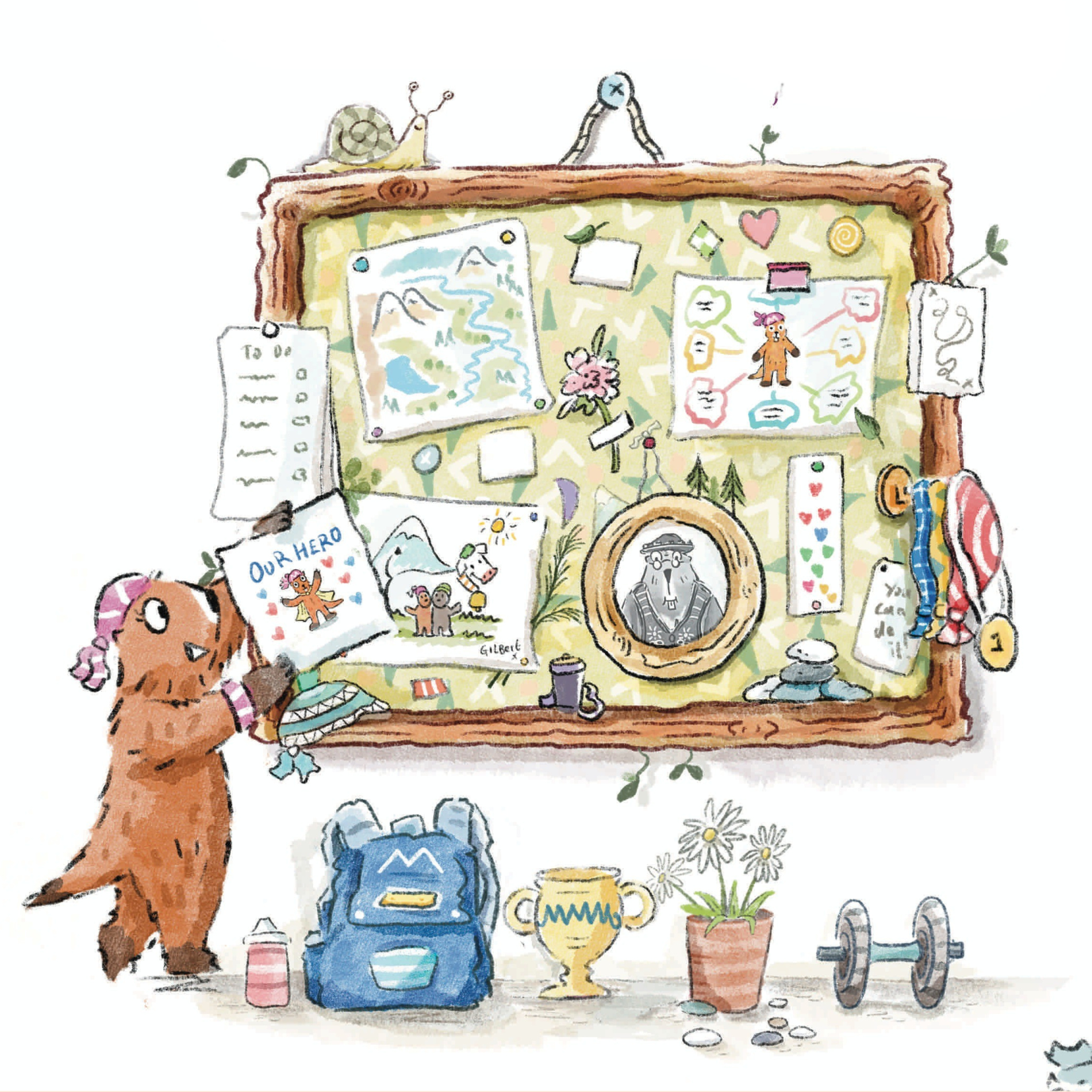
Mildred loves a vision board. She likes collecting pictures, maps and little things she’s found on runs.
After reading the story, it could be a lovely chance for children to draw their own ideas of what they’d like to achieve. You could make a little “confidence board” of something you’re working towards.
It doesn’t have to be huge. It could be tying shoelaces, brushing teeth independently, writing their name, or just something that takes confidence.
Finally - Mildred is also strong because of her team. It’s a reminder that it’s a team effort: we’re supporting children with these brave new things they’re doing.
If Mildred could say one thing to a child about trying something hard, what would it be?
Mildred would say: “Follow your heart and trust your head.”
And what that really means is: if you want to do something deep down, and you feel you could be brave enough, I’d encourage you to try.
You really can go over the mountains if you want to. So… give it a go.
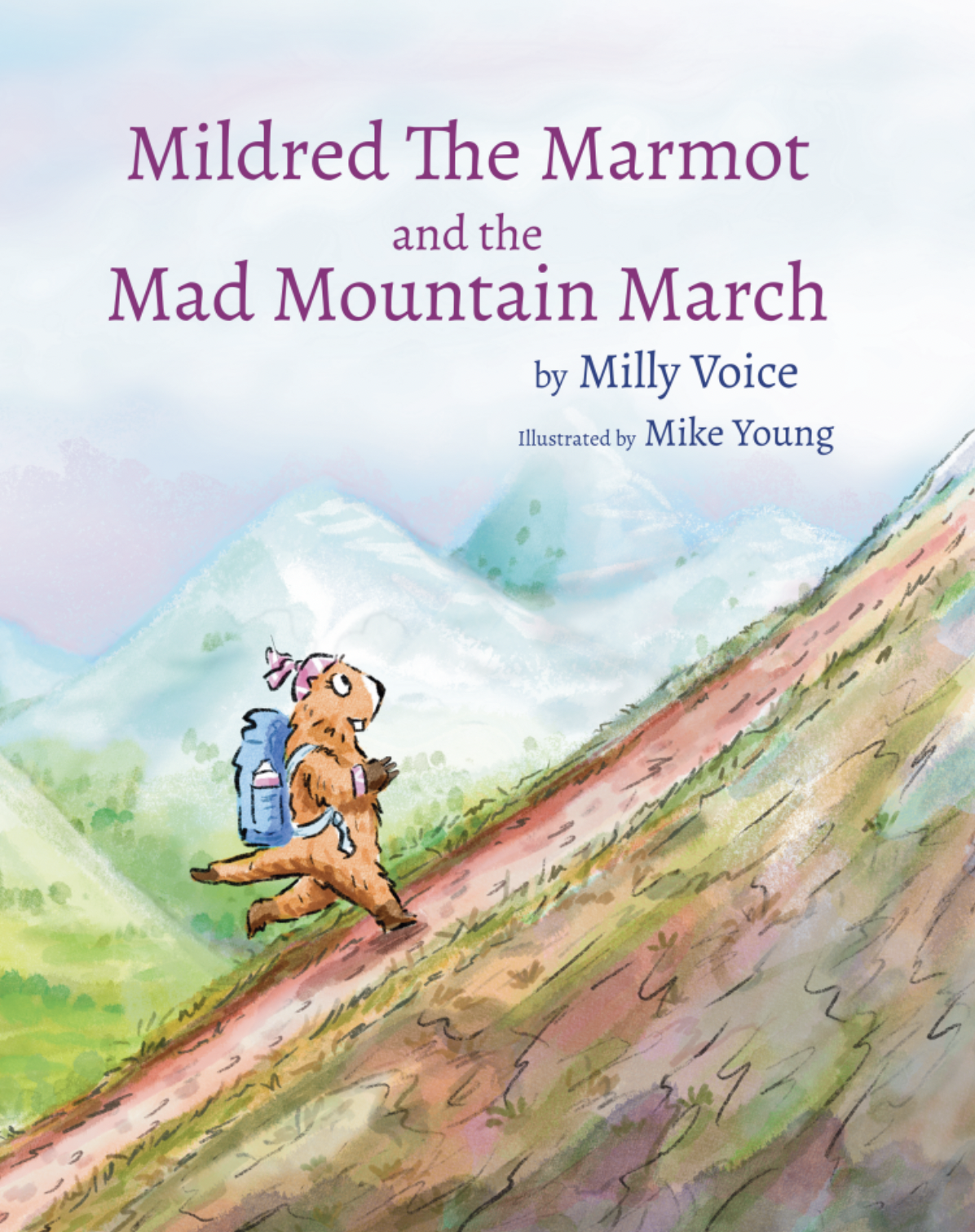
Meet Mildred, the fastest marmot on the mountain!
When her dad suggests she enter the legendary Mad Mountain March race, Mildred is excited but questions if she can do it. What if she's not fast enough? What if she fails?
Racing against speedy hares, daredevil deer, and lightning-quick stoats, Mildred discovers that the real secret to success isn't about being the fastest, it's about being brave enough to try.
Themes:
Courage and Self-Belief: Mildred's story teaches children that being brave doesn't mean you're not scared, it means trying even when you doubt yourself.
Determination and Perseverance: Through Mildred's training and race day journey, young readers learn that practice, persistence, and giving your best effort matters more than being perfect.
Friendship and Support: Mildred discovers that true friends like Moo and Gilbert believe in you, encourage you, and love you whether you finish first or last.
PRINT LENGTH: 32 pages
LANGUAGE: English
PUBLISHER: Dottie Publishing
PUBLICATION DATE: 16 Feb. 2026
DIMENSIONS: 30.4 × 24.8 × 0.3 cm
ISBN: 978-1-0684545-1-6